How to find clothes from Pinterest without losing the original
To find clothes from Pinterest, open the original Pin, follow its source and check the outfit credits before searching the image. If the original piece remains unidentified, isolate its distinctive details and look for a similar style without treating a visual resemblance as proof.
Follow the Pin before following a lookalike
Open the Pin itself rather than working only from a board thumbnail. Read its description, visit the linked page and look for the creator's caption, outfit credits or product list. A collection of reposted images may lead to another collection; keep following useful attribution until you reach a named source or a dead end.
Save the Pin link and the credited page together. Check whether a linked product is the photographed garment or a suggested replacement. An old outfit post can correctly name an item even when its shopping link now redirects to a category page.
Turn the outfit into one specific question
Decide which piece you want: the cropped jacket, straight trousers or shoulder bag. Keep the garment's outline, closures and distinctive details in your crop. A hand covering a buckle or a coat covering a waistband leaves a real information gap; a tighter crop cannot recover it.
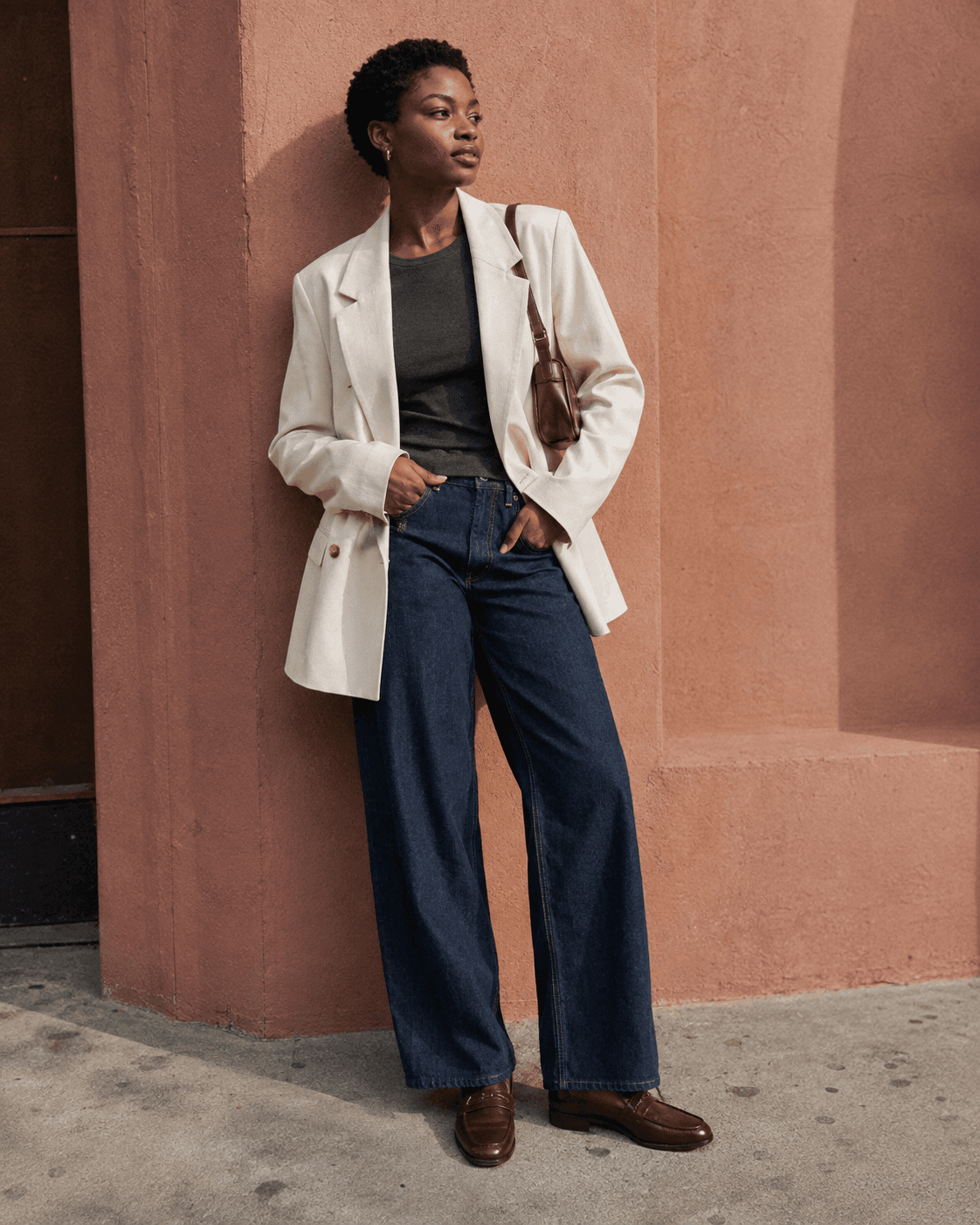
For example, investigate a cream jacket with a rounded collar and contrast buttons separately from the jeans underneath. Write those visible details down before adding uncertain terms such as a brand or fabric.
Use visual search as a lead
Pinterest's visual-search guidance describes selecting an object or area within a Pin to explore similar items. Shopping recommendations are available where supported. Google's image-search guidance also explains uploading an image and adding descriptive words. Neither route makes a similar-looking item the verified original.
Compare results against the source image, not just against one another. If you repeatedly see the wrong neckline, add the neckline to your text query. Remove your least certain description before abandoning the search.
Choose between the original and the idea
Ask what made you save the Pin. Was it a particular jacket, or the balance of a short jacket and high-waisted trousers? The first question needs product evidence; the second may have several good answers. Compare pockets, fastenings and proportions before calling anything an exact match.
Keep a small shortlist with a reason beside each link: credited original, similar cut or promising colour. Check current size, price and delivery on the seller's page. This is more useful than saving ten more images with no buying information.
Common questions
Why does the Pin link show a different product now?
The original listing may have changed, disappeared or redirected. Check the creator's dated caption and any product name or code. Treat the current destination as a separate lead until its photographs and details match.
Can I find the original when a Pin has no brand credit?
Sometimes a distinctive fastening, print or item code on a clearer source image provides a clue. If you cannot verify the identity, keep the result labelled similar rather than assuming the first visual match is the original.
What if the original Pin or post has disappeared?
Keep any source link, creator name or product credit you already have. Search the clearest saved image and its visible details. If the source cannot be recovered, describe any promising result as similar until you can verify the product identity.